
Your First Off-Road Day in Ocala National Forest: Sand, Rules and Rubber Ducks
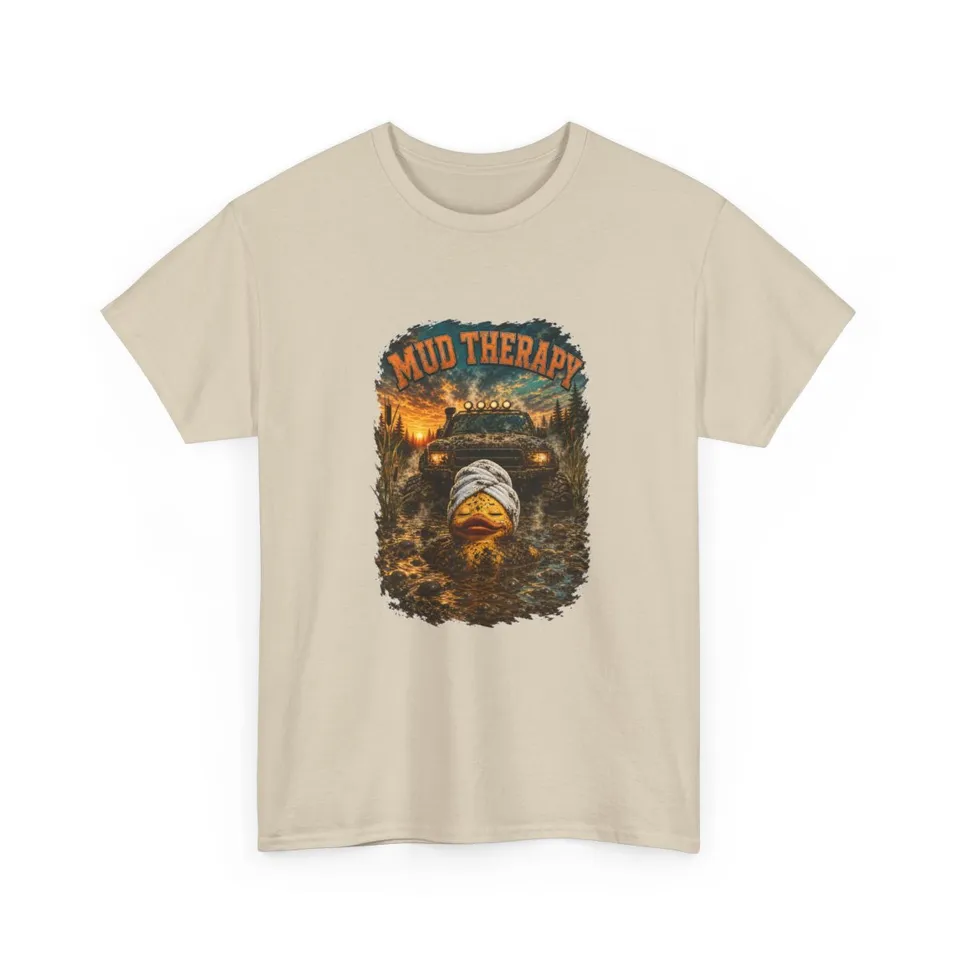
Shop this tee
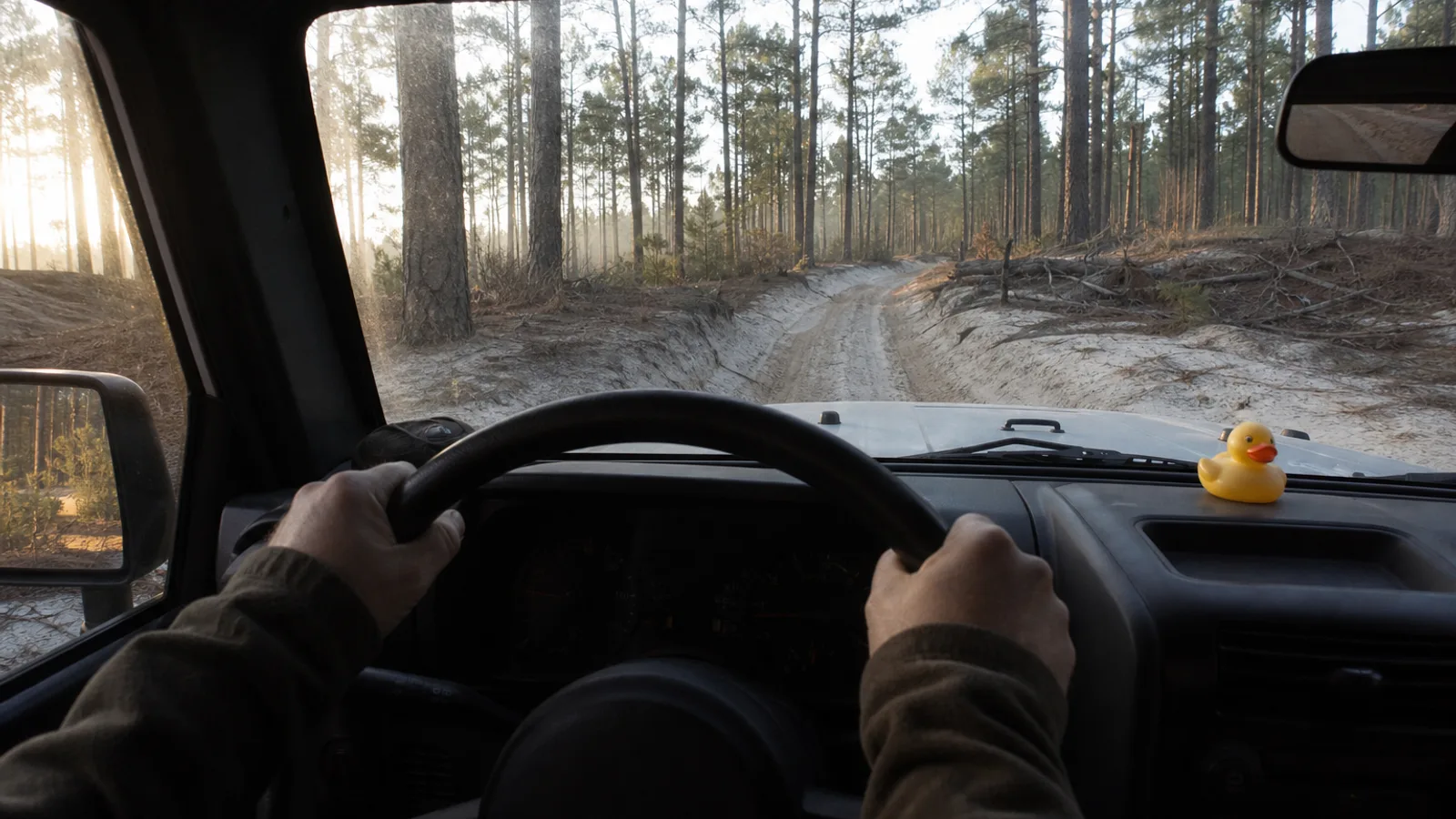
Short answer: In a street-legal 4x4, your first Ocala day belongs on the forest roads shown on the Ocala Motor Vehicle Use Map and on the Tread Lightly! Four Wheel Drive Way, an easy, stock-friendly route through soft sand. The forest's dedicated OHV trails are built mostly for ATVs, UTVs and dirt bikes and need a per-person pass. Check the Forest Service alerts the week you go, carry a compressor before you air down, stay on marked routes, and leave your rubber ducks on rigs, never in the woods.
Picture this: 7 a.m., somewhere off State Road 19. The pavement ends and the world turns the color of powdered sugar. You crack the window and smell pine. Your tires sink, just a little, and every instinct you have says gas it.
Don't.
That moment, the first soft sand under a 4x4 that has only ever known parking lots, is where plenty of off-road stories begin. Some end with a sunrise photo. Others end with a stranger's tow strap. This guide is here so yours is the first kind.
Where can a beginner drive a 4x4 in Ocala National Forest?
The Ocala National Forest has nearly 200 miles of OHV trails, according to Recreation.gov, but most of that network is designed for motorcycles, ATVs and UTVs. The Forest Service lists Delancy Loops as motorcycles and ATVs only, and the 47-mile Ocala Centennial OHV Trail as open to unlicensed vehicles under 65 inches wide. Your full-size rig is not on that list.
What full-size drivers do have is the Tread Lightly! Four Wheel Drive Way. onX rates it "Easy" and calls most of it "stock-friendly," with a full-width route that runs roughly 76 to 81 miles depending on the map. Recent reviews mention "super soft sugar sand," some mud and water, and side trails so narrow you should expect what locals call Ocala pinstriping: palmetto and scrub scratching your paint.
Before you roll, download the Ocala Motor Vehicle Use Map (the Forest Service links it through the Avenza Maps app). The Forest Service's rule is simple: if a route isn't on the map, it isn't open to motor vehicles. The map also tells you which roads are open to highway-legal vehicles only and which are open to everything.
In December 2021, Tread Lightly!, 12 volunteers from the Florida Jeep Coalition and forest rangers replaced the vandalized signs on this route's kiosk, repainted it and hauled out about two pickup beds of trash. The trail you're about to drive is cared for by people like you.
Do you need a pass to off-road in Ocala National Forest?
For the OHV trail system, yes. Passes are per person and sold on Recreation.gov: $10 for 3 days, $25 for 7 days or $75 for a year, plus a $6 processing fee per transaction. The Forest Service also says Florida requires OHVs to be titled, that riders must carry a copy of their Florida OHV registration and ID (out-of-state riders carry proof of ownership), that Forest Service-approved spark arrestors are required, and that riders under 16 must pass an online OHV safety course and wear a helmet, goggles and boots.
If you're not sure what your exact route requires, call the National Forests in Florida Supervisor's Office at 850-523-8500. And check the alerts page the same week: the Forest Service notes that several Ocala sites and trails have stayed closed for hurricane recovery, and trailheads can close for logging.
How much should you air down for Ocala's sand?
Airing down widens your tire's footprint so it floats instead of digging. A Jalopnik guide published in April 2026 suggests not going lower than 12 PSI on a sandy trail, and adds three rules worth taping to your dash:
- Don't air down unless you carry a portable air compressor.
- Air back up as soon as you leave the trail. Driving on pavement with low tires can unseat the tire from the rim or cause a blowout.
- When you re-inflate, use the pressure on your door jamb or owner's manual, not the maximum printed on the sidewall.
That number is a floor, not a target. Your tires, wheels and the weight of your rig all change the right answer, so start higher and go down a little at a time. And remember the moment from the top of this story: in sugar sand, flooring it is how you dig yourself in.
What should you pack for your first trail day?
onX's advice for this route is plain: "Drivers should bring basic recovery gear." For a beginner, that means:
- A tire gauge and compressor
- A recovery strap and proper recovery points
- A shovel for sand
- Water, snacks and a first-aid kit
- An offline map, because cell signal in the scrub is unreliable
- A trash bag that leaves with you
And the most important piece of gear isn't in the trunk: a second vehicle. The kindest rule in off-road culture is that nobody gets left on the trail. If that motto speaks to you, it's printed on our No Duck Left Behind tee, a military-style 4x4 towing its buddy home.
What are the trail rules, written and unwritten?
The Forest Service's OHV rules for Florida's national forests are clear. Stay on designated trails. Trails are two-way and built for slow speeds. Prohibited: cross-country travel, mudding, cutting donuts, making your own trails, night riding and drinking alcohol in day-use areas. The forest also lists fire restrictions in its current alerts.
The unwritten rules come from the Tread Lightly! principles, summed up as T.R.E.A.D.: Travel responsibly, Respect the rights of others, Educate yourself, Avoid sensitive areas and Do your part. In practice: go over obstacles, not around them, because going around widens the trail. Slow down at blind corners. Pack out your trash, and then some.
And keep your eyes open. onX notes that rattlesnake and black bear sightings are fairly common here. Admire them from the driver's seat.
Can you leave rubber ducks on the trail?
Yes, on rigs, never on the ground. Ducking is the friendly tradition of leaving a rubber duck on someone's 4x4 as a compliment. It started in Ontario in 2020 when Allison Parliament had no paper and wrote her note on a duck instead (we told the full story here).
The Ocala version of the etiquette:
- Duck at the trailhead, not in the forest. A duck dropped in the scrub is litter.
- Place, don't stick. Door handle, mirror or spare tire. No glue or tape on someone's paint.
- Keep the note kind. "Nice line through the sand" goes a long way.
If you want the three-step lesson on your chest, our Ducking 101 tee has it: spot a rig, leave a duck, make their day.
What is your first Ocala trail day really like?
Your first day in Ocala probably won't be perfect. You'll air down too little, or too much. You'll pick up a scratch you'll defend for years. Somebody will pull up beside you, ask "First time?" and then share their snacks.
That's the trail. It humbles you, then adopts you.
So go early, go slow and go with a friend. Come back with sand in the floor mats, a new duck on the dash and a story you'll tell at every meet this winter. And if the sun drops behind the sand pines while you're airing back up, keep an eye on the tree line. Out there, as our Sasquatch Got Ducked tee warns, nobody is safe from getting ducked.